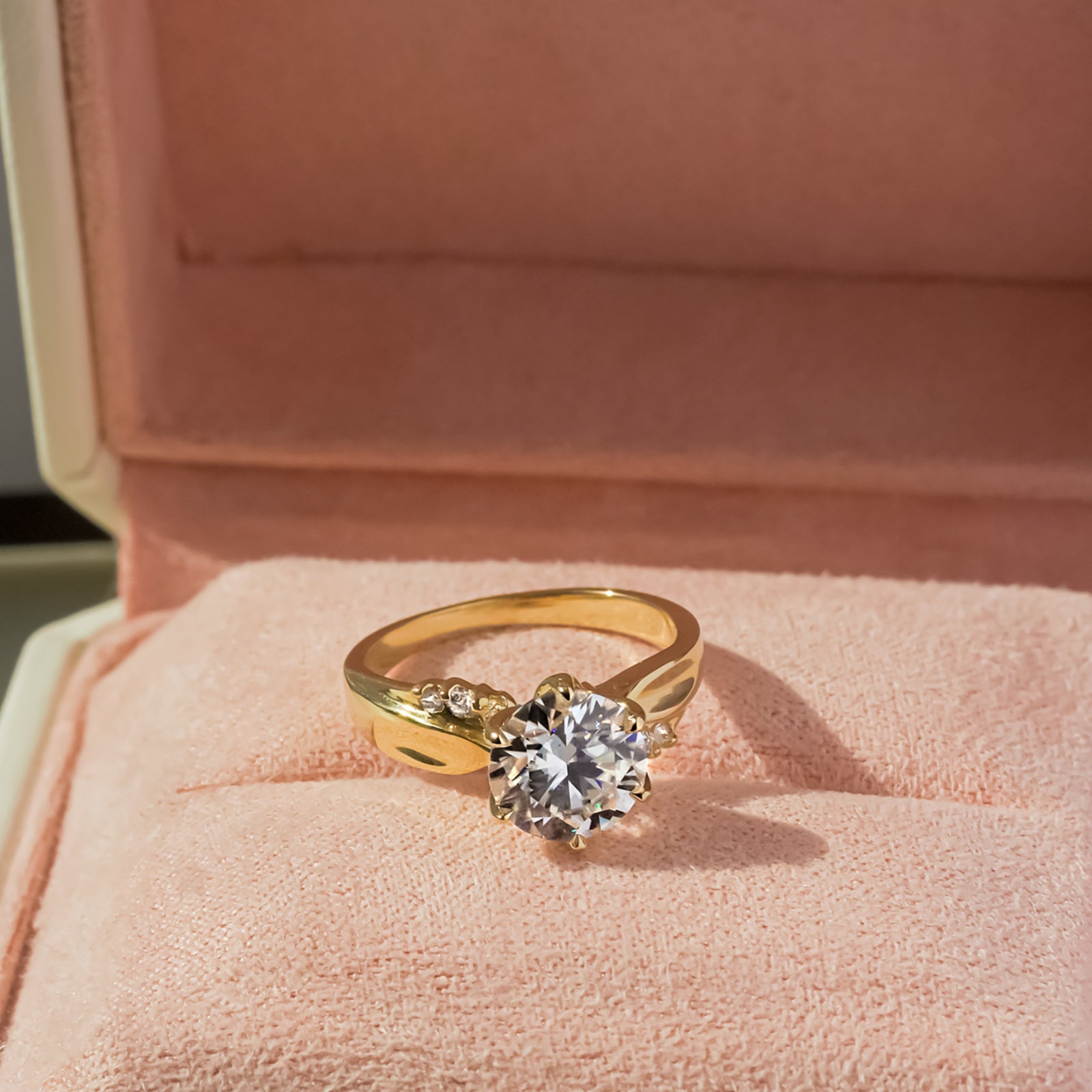

How We Make Your Ring: Inside Kobelli’s LA Workshop
Before Kobelli existed, there was a young man in a small Mediterranean town watching a jeweler work.
He watched the way the craftsman held a ring to the light, turning it slowly, checking the set of each stone with the patience of someone who understood that a piece of jewelry isn’t finished until it’s exactly right. He watched how a piece of metal became something someone would wear for the rest of their life — something that would mark a moment, tell a story, pass through generations.
That young man was Kobi Katz. And decades later, in a manufacturing studio in downtown Los Angeles, he and his team are still doing exactly that work.
From the Mediterranean to Los Angeles
Kobi didn’t build Kobelli overnight. He spent years learning the craft — the metallurgy, the stone setting, the design logic that determines whether a ring is merely beautiful or becomes someone’s most treasured possession. He studied under experienced jewelers, absorbed the traditions of the craft, and eventually came to the United States with a clear vision: build a jewelry operation that stood for quality, transparency, and direct relationships with the people who wore what he made.
In the early years, he built the Los Angeles facility under the name Baguette World, manufacturing rings for major US retailers — including Macy’s. That was the education. Running a production operation at that scale meant learning every detail of how fine jewelry is made efficiently without compromising what makes it fine.
But manufacturing for retail middlemen meant something was always missing. The person who bought the ring never knew who made it. The person who made it never knew who was wearing it. That gap bothered Kobi.
So in the early 2000s, he pivoted. Kobelli would sell directly to the people who wear the jewelry — no retail intermediaries, no markup chain, no anonymity. The same craftsmanship, the same downtown LA studio, the same artisans. Just a direct line between the people who make the ring and the person who wears it.
That decision is the foundation of everything Kobelli does today.
What “Handcrafted in Los Angeles” Actually Means
When a jewelry company says “handcrafted,” it can mean almost anything. It can mean “assembled in the US from foreign-made components.” It can mean “designed locally, manufactured overseas.” It can mean very little.
When we say handcrafted in Los Angeles, we mean our designers, metalworkers, and stone setters are all under one roof — in the same downtown LA facility Kobi built — doing the actual work of making your ring.
No outsourcing. No drop-shipping. No sending your ring to a third-party manufacturer and hoping for the best.
Our team handles the full range of production in-house: the 3D design, the casting, the metal finishing, the stone setting, the polishing, and the quality inspection. When your ring is ready to ship, it hasn’t left that building until it’s ready to leave to you.
This matters for quality. When the same team handles every step of production, they can catch a problem at any stage. When manufacturing is outsourced, each transition is an opportunity for something to be missed.
It also matters for customization. When you’re working with a shop that doesn’t make its own rings, customization means selecting from a list of preset options or waiting for a third party to respond. When we make the ring ourselves, customization means actually changing the design — because we’re the designers.
How Your Custom Ring Gets Made: Step by Step
Step 1: Consultation
Every custom ring starts with a conversation. We offer personal consultations — in our Los Angeles studio if you’re local, or virtually through our scheduling link if you’re not.
This is where we listen. What’s your partner’s style — do they lean classic and elegant, or modern and bold? What metal are they drawn to? What stone? Do they have a ring they’ve saved a photo of, or are they starting from scratch? Have they mentioned a specific shape or setting style?
Most of our customers come in with a general direction and leave with a clear picture. Some come in with a very specific vision and we help them refine it into something buildable. Some come with a photo of a ring and we tell them exactly how we’d recreate it.
There’s no pitch and no pressure. This is a conversation about what they want, full stop.
Book a consultation — in person or virtual.
Step 2: The 3D Design Render
Once we understand what you’re looking for, our design team gets to work. Within approximately three business days, we produce a detailed 3D computer-generated render of your ring — every angle, every proportion, every detail exactly as it will look when it’s made.
This is one of the most important parts of the process, and it’s something that traditional retail simply cannot offer. You’re not committing to anything based on a verbal description or a vague sketch. You’re looking at your ring before a single piece of metal has been touched.
The render shows you the setting style, the metal color, the stone size and shape, the band profile — everything. If something isn’t right, this is the moment to change it. Different prong style. Slightly wider band. Different stone cut. We adjust the design and show you a new render. This back-and-forth continues until you’re looking at exactly what you want.
Step 3: Your Approval
Nothing goes into production until you say go.
We’ll share the final render with you for review and approval. Some customers approve on the first look. Some want to see a small adjustment. Some want to compare two versions side by side. All of that is part of the process.
Only after your explicit sign-off do we move to the next step. This is not a formality — it’s a meaningful checkpoint. A ring is a significant investment and a deeply personal object. The approval step exists because we believe you should know exactly what you’re getting before we make it.
Step 4: Production
With your approval in hand, production begins.
The ring is cast in the requested metal — white gold, yellow gold, rose gold, or platinum — using an investment casting process that starts with a precise wax model derived from the 3D design. Once cast, the metal is cleaned and prepared for finishing.
Stone setting comes next. Our setters work under magnification, placing each stone by hand. For a diamond solitaire, this means getting the center stone seated at precisely the right angle and depth. For a pavé or halo design, it means setting dozens of smaller stones with consistent spacing and orientation. This is skilled, detailed work — the kind of work you can’t automate without losing something.
After setting, the ring goes through finishing: filing, sanding, and polishing until the metal reaches the intended surface quality — high polish, satin, brushed, or whatever the design calls for.
Step 5: Quality Control
Before your ring leaves the building, it goes through a thorough inspection. We check the setting security of every stone. We verify the finish quality. We confirm the metal color and the ring dimensions match the approved design.
We’re not checking a box. We’re checking a ring. We made it, which means if something isn’t right, we fix it here — before it reaches you.
Step 6: Shipped to Your Door
Once it passes inspection, your ring is packaged and shipped. Depending on where you are and which shipping method you choose, most orders arrive within a few days of shipping.
Why In-House Manufacturing Matters to You
It’s worth being direct about why this model benefits you specifically — not as a marketing point, but as a practical reality.
Quality control is complete and consistent. Because every step happens under one roof, problems don’t fall through the cracks between vendors. When we sign off on a ring, we know what went into it from the first 3D render to the final polish.
Customization has no ceiling. We’re not selecting from a menu of preset options and sending your order to a factory. We’re designing and building from scratch. If you can describe it, we can almost certainly make it. Reach us at CUSTOM@KOBELLI.COM to start a custom inquiry.
The lifetime warranty is meaningful because we made it. Any manufacturer can offer a warranty. Ours has weight because we’re the people who would honor it. We know how every ring was made. We have the capability to repair or replace work we produced. The warranty isn’t a marketing promise — it’s an extension of our responsibility as the makers.
No outsourcing surprises. When jewelry manufacturing is subcontracted overseas, quality can vary batch to batch. You may receive exactly what you ordered, or you may receive something slightly different that you don’t notice until you’re already wearing it. When the same team makes every ring in the same facility, that variability disappears.
What the Lifetime Manufacturer Warranty Actually Covers
We want to be honest about this, because it’s worth explaining clearly.
Our lifetime manufacturer warranty covers defects in materials and workmanship — things that go wrong because of how the ring was made. If a prong fails because of a manufacturing defect, we fix it. If a stone is lost due to a setting defect, we replace it. If there’s a structural issue with the metal work under normal wear conditions, we address it.
What it doesn’t cover: damage from accidents, improper care, or modification by a third-party jeweler. This is standard across the industry and it’s honest — a ring that’s been dropped, stepped on, or worked on by someone outside our shop isn’t something we can warranty, because we can’t verify what happened to it.
Our recommendation: treat your ring well, have it inspected annually, and come to us if anything ever looks or feels off. We’d rather catch a loose prong early than hear from you after a stone is lost. And if something goes wrong that falls under the warranty, we’ll make it right.
Your Ring, Your Story
More than 500,000 customers have trusted us with some of the most significant moments of their lives. We don’t take that lightly.
Every ring that leaves our studio carries something of the craft Kobi learned in that Mediterranean town and spent decades refining. The care he put into building this operation — the attention to detail, the commitment to making things right — is in the hands of the team that makes your ring today.
If you’re starting to think about a custom piece, we’d love to hear what you have in mind.
Book a consultation — in person in Los Angeles or virtually, wherever you are.
Or reach us directly for custom inquiries: CUSTOM@KOBELLI.COM
And if you’re ready to browse what we make, start here: Shop Kobelli Grown engagement rings