
Why Is This Ring $8,000 Less? The Jewelry Markup Truth
You’re looking at two rings.
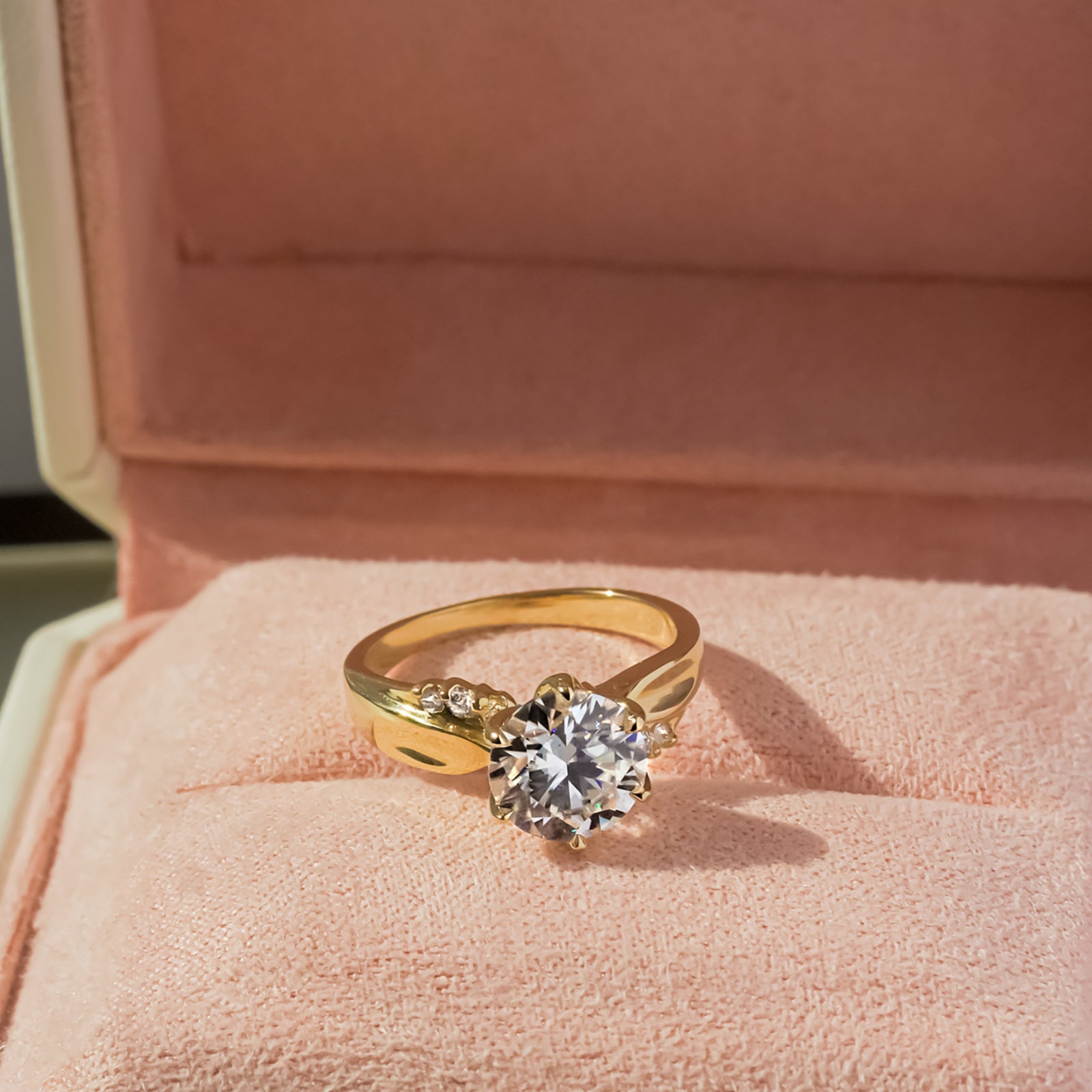
One is $12,000 at a mall store. Clean display case, attentive sales staff, a little velvet box with a branded ribbon. An almost identical ring — same metal, same diamond quality — is $4,200 at Kobelli.
You’re suspicious. You should be.
When something is a fraction of the price, there are really only two explanations: it’s lower quality, or someone in the traditional supply chain has been taking a very large cut for a very long time. In the jewelry industry, it’s almost always the second one.
Here’s exactly what’s happening.
The Traditional Jewelry Supply Chain Has Five Layers
Most people assume jewelry goes from “the place that makes it” to “the place that sells it.” The reality is there are at least five separate hands between the raw diamond and your ring finger — and every single one of them takes a markup.
Layer 1: The Miner
For mined diamonds, this is where the stone comes from. Mining operations sell rough stones to cutters. The markup at this layer is baked into the cost of running an extremely capital-intensive global operation.
Layer 2: The Diamond Cutter
Rough stones are cut and polished by specialized cutters, typically in India, Belgium, or Israel. These cutters add their own margin to cover labor, equipment, and expertise.
Layer 3: The Wholesaler
Polished diamonds are then sold to wholesalers who aggregate inventory from multiple cutters and sell to manufacturers or distributors. Another margin layer — typically 20–40%.
Layer 4: The Jewelry Manufacturer
A manufacturer (often overseas) purchases the stones from wholesalers, fabricates the settings, assembles the rings, and sells them to distributors or directly to retail stores. Another 30–50% added.
Layer 5: The Retail Store
This is where it really compounds. A retail jewelry store — especially a mall-based chain — is carrying enormous overhead: prime real estate, full-time sales staff, security infrastructure, national advertising, and a brand markup for the logo on the box. It’s standard for retail jewelers to apply a 200–300% markup on top of their cost.
The Result
By the time a ring reaches your finger through traditional retail, the price you pay may be four to five times what it cost to actually make it. You’re not paying for a better ring. You’re paying for a supply chain that wasn’t designed with you in mind.
What That Looks Like in Numbers
Here’s a hypothetical price journey for a ring that ends up at $12,000 in a mall store. The quality of the diamond and the metal is identical to what you’d find at Kobelli for $4,200.
|
Stage |
Cost at This Stage |
Markup Applied |
|
Diamond cutter (wholesale cost) |
~$1,400 |
— |
|
Wholesaler |
~$1,900 |
~35% |
|
Manufacturer (ring fabrication + stone) |
~$2,800 |
~47% |
|
Distributor |
~$3,900 |
~39% |
|
Retail store (floor cost → sale price) |
~$12,000 |
~207% |
That $12,000 ring has about $2,800 of actual manufacturing cost in it. The other $9,200 is the cost of moving through an inefficient supply chain designed decades ago for a world where consumers had no alternative.
How Kobelli Works
Kobelli is both the manufacturer and the seller. There is no wholesaler. There is no distributor. There is no retail floor, no mall lease, no branded shopping bag markup.
Our founder Kobi Katz built a manufacturing facility in downtown Los Angeles over forty years ago. We design the rings. We fabricate the settings. We set the stones. We inspect every piece. And we sell directly to you.
The chain looks like this:
Diamond cutter → Kobelli → You
That’s it.
Because we import diamonds directly from cutters around the world and manufacture everything in our own LA facility, we can sell at a price that reflects what things actually cost to make — not what a chain of middlemen needs to stay afloat.
What the direct model means for the $4,200 ring
That $4,200 ring isn’t made from cheaper materials or cut corners. It’s made from the same quality metals and stones. The difference is that you’re paying manufacturing cost plus a reasonable direct-to-consumer margin — not manufacturing cost plus five layers of middlemen.
What You Get with Kobelli That Traditional Retail Cannot Match
Cutting out the supply chain doesn’t just lower the price. It changes the entire experience.
Lifetime manufacturer warranty on every piece. This is only possible because we made it. When a chain store offers a warranty, it has to send your ring back through a third-party repair service. When we offer a warranty, we’re the manufacturer — we can fix what we made, exactly the way we made it.
Customization on nearly every piece. Want a different metal? A different setting style? A specific stone size or shape? Because we manufacture in-house, customization isn’t an upsell — it’s just how we work. Our 3D design process means you see exactly what you’re getting before production begins.
Certified diamonds, always. Every lab-grown diamond we sell comes with a GIA or IGI certificate. You get the documentation.
Personal service. When you contact us, you’re talking to people who work in the same building where your ring is made. There’s no offshore support center.
1% of every purchase donated to a cause of your choice. Because we have the margin to do it. Traditional retail, operating on thin volume margins at high overhead, doesn’t have that flexibility.
What You Don’t Get
Let’s be honest about the trade-offs.
You won’t get a flagship store experience with marble countertops and a concierge offering you champagne while you browse. You won’t get a branded box with a famous logo on it.
Here’s the thing: the person wearing the ring doesn’t care about the box. They care about the ring. After the proposal, the box goes in a drawer. The ring goes on their hand for the rest of their life.
You’re not paying for the atmosphere of the jewelry store. You’re paying for the ring. And the ring is what lasts.
Lab-Grown Diamonds Add Another Layer of Savings
It’s worth noting that the pricing advantage of the direct model compounds when you add lab-grown diamonds into the equation.
Mined diamonds carry their own supply chain: the mining operation, international transport, rough-to-polished processing. Lab-grown diamonds are created in a controlled facility, which eliminates a significant portion of that upstream cost.
The result: lab-grown diamonds are typically 30–60% more affordable than their mined equivalents — same cut, same clarity, same GIA or IGI certification. Pair that with the direct-to-consumer model and you’re looking at a genuinely significant difference in price for genuinely equivalent quality.
A $12,000 mined diamond ring at a mall store might compare to a $4,200 lab-grown ring from Kobelli. The diamond quality is similar. The difference is the stone type and the supply chain.
The Bottom Line
You deserve to know what you’re actually paying for. Jewelry pricing has been opaque for a long time because retailers depended on consumers not knowing how the supply chain worked.
We’ve been manufacturing jewelry in Los Angeles since 1980, and we built this direct-to-consumer model because we believe a ring should be priced based on what it costs to make beautifully — not what it costs to push it through five layers of middlemen and into a mall.
If you’ve been looking at rings and feeling like the numbers don’t add up, they probably don’t. Come talk to us.
Book a consultation — we’ll walk you through what you’re actually looking at and what it actually costs to make it.